
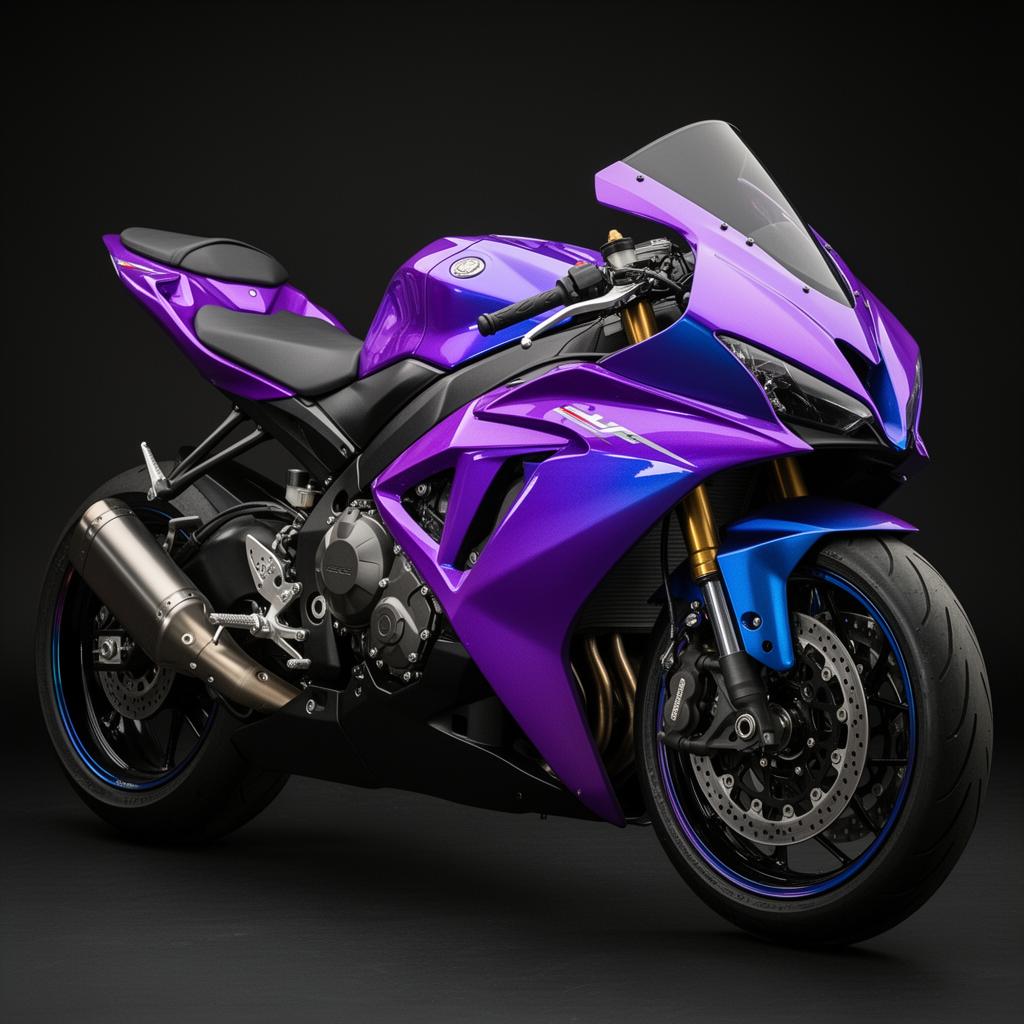
Sport motorcycle wrapped in color-shift purple vinyl
Motorcycle Wraps · Installer Guide

Motorcycle Wrap Guide (Technical)

Motorcycle wraps are the most technique-driven job in the shop. Fairings, tanks and tail sections are tight compound curves that demand aggressive but controlled film stretch, precise heat management, and a film thin enough to conform without bridging. This is advanced, panel-off work.

15-35 sq ft
Film footage
8-18 lin ft
60" film
6-14 hrs
Labor
Specialist
Skill level
Technical Schematic

19-Panel Anatomical Wrap Map

Select any panel to inspect surface footage, max stretch threshold, and post-heating target temperature.

Post-Heat: 195°F (91°C) 0-5% (Neutral)
Click any section to inspect specs
Selected Panel

Hood / Bonnet

Low Complexity
Surface Area22-30 sq ft
Linear Stretch Allowance0-5% (Neutral)
Post-Heating Reset Temp195°F (91°C)
Seam SpecificationKnife-less Clean Tuck
Installer Pro Tip

Tension glassing technique from center ridge outward. Crown requires zero stretch to avoid lifting.

Panel-by-panel coverage

Where the film goes and what to watch for on each section of a motorcycle.

Fuel tank

Steepest compound curve on the bike - plan a hidden seam under the knee pad or tank pad.

Front & side fairings

Vents and intakes are inlaid or wrapped separately; remove panels for clean edge wraps.

Tail & seat cowl

Tight radii need full heat-forming; relieve corners to prevent fingers and tenting.

Fenders & hugger

Small, highly curved - pre-stretch and post-heat to lock the memory.

Shop-Grade Pricing Data

Motorcycle Wrap Cost & Pricing Breakdown

Real shop estimates based on 1535 sq ft of film, 6-14 hrs installation labor, and current material tier wholesale rates.

Calculate exact motorcycle quote
Standard Cast (Gloss / Satin)
$513 – $1,133
3M 2080 / Avery SW900 3.2–3.5 mil
Metallic / Pearl / Carbon
$628 – $1,285
Flake layer, requires directional install
Color Shift / Chrome
$980 – $1,960
High-skill heat limits & zero-stretch zones
Full Front PPF (8 mil)
$708 – $1,278
Bumper, hood, fenders, mirrors & lights
Includes panel prep, post-heat cycle (195–215°F), edge seal and standard 10–15% waste allowance.
Rate: $65–$85/hr shop baseline

Motorcycle wrap technical notes

Why bike wraps are advanced work

Unlike a flat car door, every motorcycle panel curves in two directions at once. Film must be heated to 105-140°F (40-60°C) to stretch into the curve, then post-heated above 195°F (90°C) to remove the stretch memory so it does not pull back. Skip the post-heat and the edges lift within weeks.

Panel-off vs. on-the-bike

Professional results come from removing fairings, tank and tail sections and wrapping them on the bench. This lets you wrap edges fully around each panel for an OEM look, instead of trimming at a visible edge. Budget removal and refit time into the quote.

Footage and film choice

A full sport-bike wrap uses only 8-18 linear feet of film, but it must be a thin, highly conformable cast vinyl. Color-shift and metallic films are popular on bikes because curved panels show the flip dramatically - preview the shift in the visualizer before committing.

Micro-Engineering Anatomy

Cast Vinyl & PPF 4-Layer Exploded Architecture

Understanding the multi-tier cross section that prevents bubbles, enables slideability, and protects factory paint.

Layer 2: 3.2 - 3.8 mil (81 - 96 µm)
Layer 2 Specification

Dual-Cast PVC / TPU Color Core

3.2 - 3.8 mil (81 - 96 µm)
Engineering Function

Poured liquid polymer formulated with automotive-grade pigments and UV-blocking stabilizers. Zero internal structural stretch memory.

Trade Standard Benchmark

Conforms smoothly to compound 3D curves and rivets without lifting or shrinking.

Pressure Repositionable
Air-Egress Micro-Matrix

Best finishes for motorcycles

Jump straight into the library, pre-filtered to the finishes that suit this build.

Popular motorcycle wrap colors

Search the most-requested colors for this vehicle type.

Plan the whole job

Motorcycle wrap FAQs

Is wrapping a motorcycle harder than a car?+

Per square foot, yes. Bike panels are tight compound curves that require heavy heat-forming and post-heating. The total film area is small, but the technique bar is much higher.

How much vinyl does a motorcycle wrap use?+

A full sport-bike wrap typically uses 8-18 linear feet of 60-inch film. Tanks and fairings are small but waste-heavy due to their curves.

Can you wrap motorcycle fairings without removing them?+

You can, but removing fairings, the tank and tail sections lets you wrap edges fully for an OEM finish. On-the-bike wraps leave visible trimmed edges that are more prone to lifting.

Wrap guides for other vehicles